
A High-End Example of Workflow-Focused Imaging Technology:
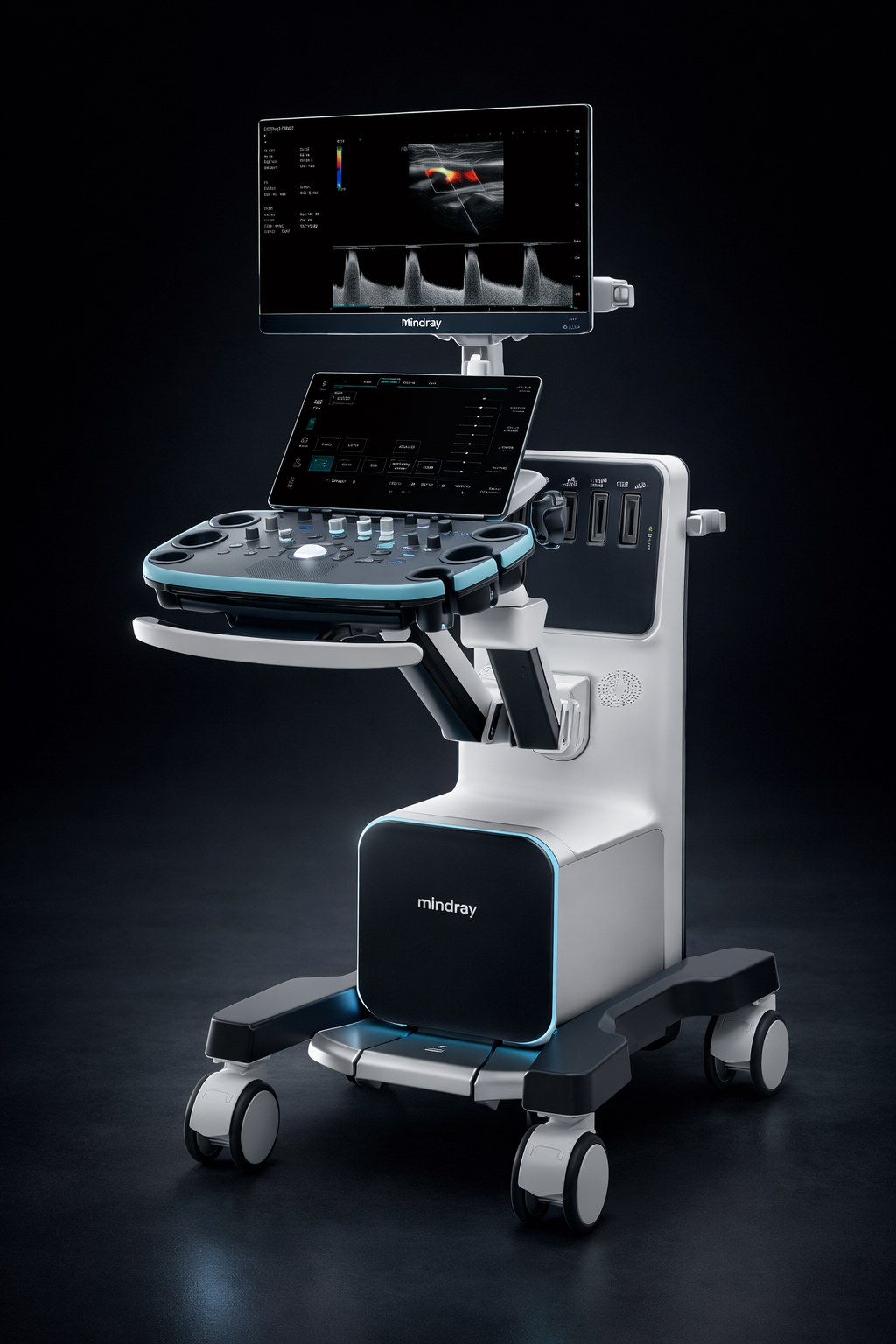
Mindray Resona I9
A modern system
Such as the Mindray Resona I9 demonstrates how today’s ultrasound platforms are designed not only for image quality, but also for mobility, automation, workflow support, and user convenience. For hospitals and diagnostic centers evaluating diagnostic imaging solutions, it offers a useful example of how imaging technology can be aligned with operational needs.
One important contributor to efficiency is the system’s iConsole intelligent control panel. With an exam-specific control panel layout and special E-ink keys, the interface adapts to different clinical scenarios. In practice, this can help reduce unnecessary manual complexity for operators. Rather than navigating a static layout for every case, clinicians can work with controls that are more relevant to the exam at hand. That can support faster setup, smoother transitions between studies, and improved user confidence during high-volume workflows.
The full-space floating control panel also addresses a real operational challenge: scanning posture. In hospitals, sonographers often need to work in varied and sometimes awkward positions, whether standing, crouching, stretching, or scanning across a bed. A panel that adjusts more freely can support ergonomic scanning in crowded imaging rooms, ICU settings, or during bedside exams. Over time, this kind of flexibility can help reduce operator fatigue and make workflows more sustainable.
Mobility is another area where the Resona I9 aligns closely with hospital workflow needs. Its fold-down design, compact movement profile, and minimum 1-meter height support easier transport through clinical spaces. The system is also designed for mobile service convenience, including transport by MPV, which can be relevant for outreach diagnostics or inter-facility use.
In bedside and critical care environments, the ability to perform exams without power cables is especially meaningful. With up to 4 hours of continuous scanning, the system supports cable-free operation in settings where access, speed, and space are limited. For ICU workflow, emergency response, or point-of-care assessments, that can reduce dependency on fixed-room scanning and avoid delays associated with relocating patients or searching for power access. The auto indication of residual power when grasping the right handle is a small but practical usability detail that supports better movement planning during the day.
Image quality also has a direct effect on workflow. The Resona I9 is powered by the ZST+ platform, which uses channel data-based processing rather than conventional beam-forming. From a workflow perspective, this matters because stronger imaging performance can support diagnostic confidence and reduce repeat scans. When clinicians can obtain clearer, more reliable imaging data efficiently, the entire care pathway can move faster.
The system’s workflow value is further strengthened by smart tools designed to reduce manual steps and standardize assessments. Smart Breast, for example, supports automatic lesion detection, measurement, annotation, analysis, and reporting, along with smart BI-RADS support. In routine breast imaging workflows, this can contribute to better productivity and more consistent documentation. Smart Thyroid supports multi-plane TI-RADS analysis, helping make thyroid scanning workflows more structured and efficient. Smart HRI assists with automatic recognition and brightness ratio calculation of the liver and renal cortex, supporting liver steatosis evaluation in a more efficient and standardized way.
Beyond routine automation, the platform also includes advanced capabilities that can improve the depth and usefulness of imaging while still supporting practical workflows. V Flow enables visualization of vascular hemodynamics with color-coded vector arrows and ultra-high frame rate support, offering useful functionality in vascular assessment. HiFR STE delivers a smoother elastography display with much faster frame rates, which can be valuable in breast and liver evaluation. UWN+ Contrast Imaging is designed to improve sensitivity for minor signals and support lesion diagnosis and perfusion studies. Tools such as TT QA for myocardial movement evaluation and R-VQS for vessel hardness and pulse wave velocity analysis expand the system’s clinical utility across specialties.
Taken together, these features show how an advanced ultrasound platform can support not just broad clinical application, but also day-to-day hospital productivity.
Real Hospital Workflow Benefits of Modern Imaging Systems
When hospitals invest in...
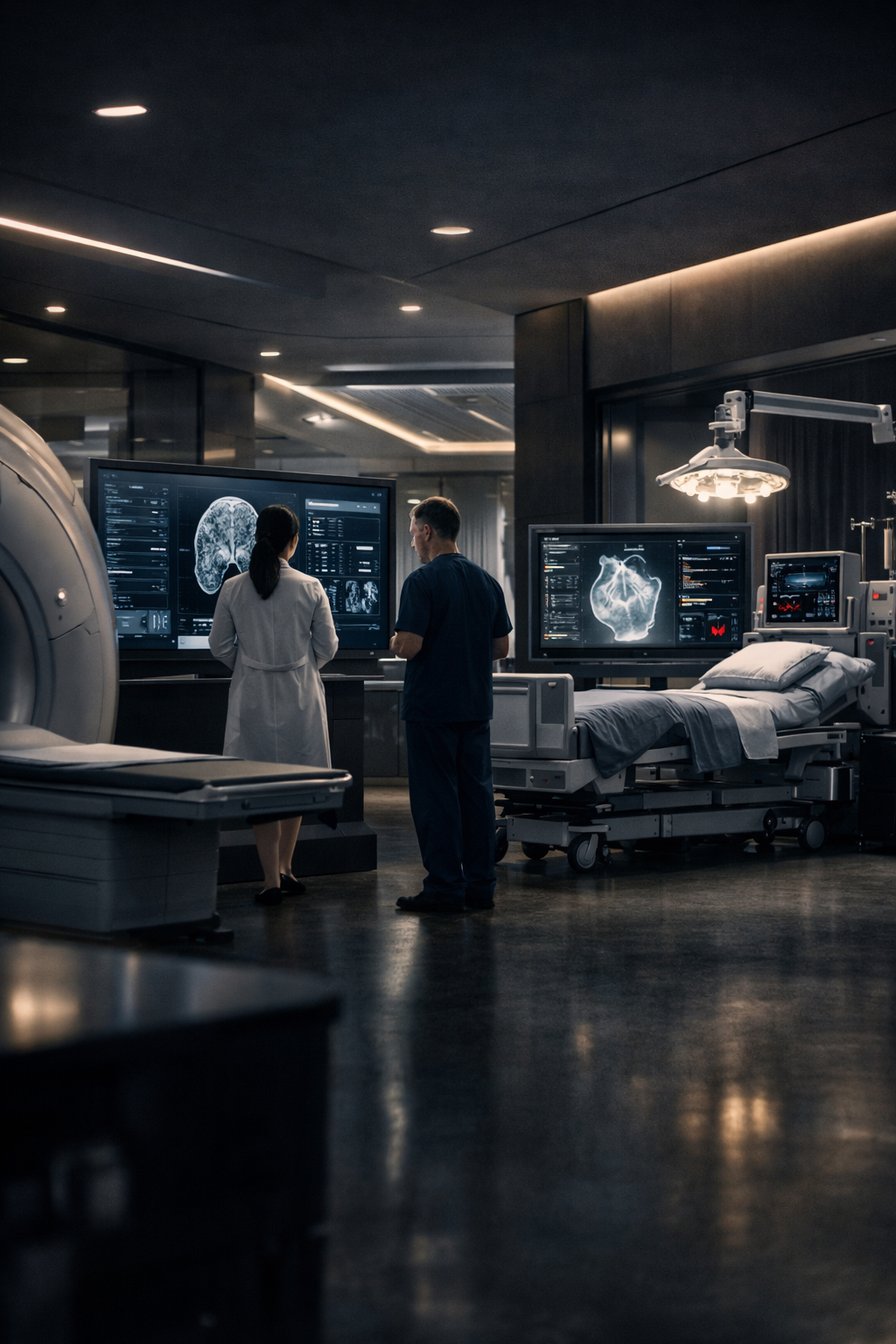
Smart, workflow-oriented imaging technology, the benefits are visible across multiple levels of operation.
First, improved image clarity and advanced processing can help reduce repeat exams. That saves time for both staff and patients while improving equipment utilization. In busy departments, even a modest reduction in repeat scans can free valuable scheduling capacity.
Second, smarter controls and automation can shorten exam completion time. Systems that streamline measurement, annotation, lesion analysis, and reporting help operators move more efficiently through routine cases without sacrificing consistency. This is particularly valuable in breast, thyroid, liver, vascular, and multi-specialty ultrasound workflows.
Third, mobility and cable-free bedside capability improve responsiveness. In ICU or emergency settings, being able to bring imaging directly to the patient can reduce transfer delays, support faster clinical decisions, and improve care coordination between departments. Portable ultrasound workflow becomes not just a convenience, but an operational advantage.
Fourth, ergonomic flexibility contributes to staff performance. Imaging teams who can work with adjustable panels and adaptive layouts are better equipped to manage demanding workloads across different physical environments. Reduced operator strain also supports long-term productivity.
Fifth, standardization improves quality control. Smart imaging tools that support structured analysis and reporting can help hospitals reduce variation between users, strengthen documentation, and support more reliable routine assessments.
Finally, patient experience benefits as well. Faster exams, shorter wait times, fewer repeat studies, and easier bedside access all contribute to a smoother care journey. In a healthcare environment where patient satisfaction and operational efficiency increasingly go hand in hand, these gains matter.
Conclusion
Modern imaging technology is becoming essential to efficient hospital operations. As hospitals work to improve patient throughput, reduce delays, support faster decision-making, and make better use of staff and equipment, imaging systems must do more than capture diagnostic data. They need to support flexible, connected, and efficient workflows across departments.
Advanced ultrasound platforms are a strong example of this shift. With better mobility, smarter automation, improved ergonomics, and imaging performance that supports diagnostic confidence, they can help hospitals improve both clinical delivery and operational coordination.
Solutions such as the Mindray Resona I9, offered through Sri Pharma Life Sciences Pvt. Ltd., reflect how imaging innovation can align with both clinical excellence and hospital workflow efficiency.